
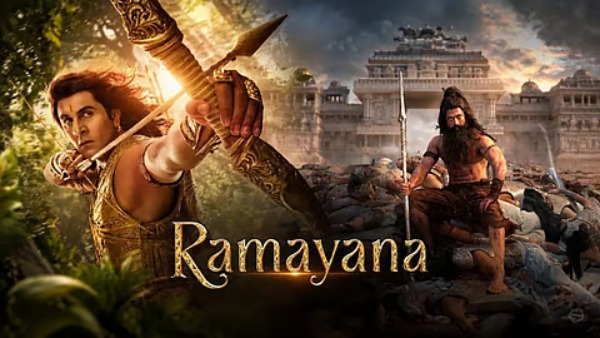
We will not tolerate a film that glorifies Ravana, distorts the original Ramayana and promotes a ‘Communist’ agenda! – Hindu Janajagruti Samiti
Panaji, 17th November – Certain scenes in the recently released film ‘Ramayana’ deliberately alter the original story of the Ramayana, written by Maharshi Valmiki, under the pretext of ‘creative freedom’. The excessive glorification of Ravana, distortion of several incidents, deliberate denigration of Lakshman, and portrayal of Lord Shri Ram and Lakshman in ways that contradict their valour are among the many extremely objectionable and infuriating aspects of the film. The ‘Ramayana’ is a matter of deep faith for crores of Hindus. The film also appears to promote a ‘Communist’ agenda. Therefore, if Ravana is glorified instead of Lord Shri Ram and references from our religious scriptures are distorted, we will strongly oppose the upcoming second part of this film. Warning the filmmakers of this, Dr. Manoj Solanki, Goa coordinator of Hindu Janajagruti Samiti, appealed to Sanatani Hindus not to watch this film, which promotes a ‘Communist’ narrative.
Dr. Manoj Solanki said that the film should portray events exactly as they are described in the Ramayana. However, several incidents from the original Ramayana have been distorted. This is unacceptable. At a time when the country has a Prime Minister who is a devotee of Lord Shri Ram and a government that regards Shri Ram as an ideal, it is unfortunate that history is being distorted through such creative works. The Censor Board appears concerned about the sentiments of followers of every religion except Hindus, and has absolutely no regard for Hindu religious sentiments. He also stated that the Censor Board must thoroughly study religious scriptures before granting certificates to films based on them. The Censor Board has the entire responsibility of verifying whether films based on religious subjects have been made without distorting the original accounts. However, just as on several previous occasions, the Board has failed to discharge its duties properly. When the film ‘Messenger of God’ faced opposition from Muslims, it was banned in Maharashtra. When Christians opposed the film ‘The Da Vinci Code’, it was banned in Goa and Kerala. Not only that, when the Christian community objected a week after the release of the film ‘Kamal Dhamaal Malamaal’ over a scene in which a ‘Father conducts the marriage of a dog’, the Censor Board withdrew the film, made corrections and then released it again. In that case, why is the Censor Board so insensitive towards the religious sentiments of Hindus? This is a question we wish to raise. With regard to the objectionable scenes in this film, we wish to convey to the producers, director and Censor Board that if similar distortions are found in the second part as well, we will take to the streets across the country and strongly oppose the film. On behalf of all Hindu organisations we appeal to the filmmakers to screen the second part for Hindu saints and scholars of the Ramayana before its release. The government, which is devoted to Lord Shri Ram, has also been urged to take a stand on a film that denigrates Him.
Our major objections to the film are as follows:
- Ravana, the wicked king who actually destroyed the ashrams of Rishis and sages, has been portrayed in this film as a saviour of the oppressed who provides gold houses to the poor. Ravana was the king of demons. Demons were not an oppressed community; they were perpetrators of atrocities. The film portrays Ravana as someone who delivers justice to the oppressed, thereby presenting him in a manner based on Communist ideology.
- Ravana, who abducted Mata Sita and had received a curse that he would be reduced to ashes if he touched another man’s wife because of his atrocities against several women, is portrayed as a protector of women’s honour. The film depicts him killing Shurpanakha’s husband, Vidyutjiva, because he had harassed a maidservant. This, too, is part of the Communist agenda.
- The film depicts Shurpanakha as having approached Lord Shri Ram merely with a marriage proposal, and Lakshman cutting off her nose solely because of this proposal. Even more infuriating is the scene that follows, in which Mata Sita reprimands Lakshman, saying, ‘You have no right to disfigure a woman’s appearance.’ The film also depicts Lord Shri Ram apologising to the demons Khara and Dushana for Lakshman’s act of cutting off Shurpanakha’s nose. These portrayals are highly objectionable. Incidents that never occurred in the Ramayana have been unnecessarily inserted to propagate the position of the so-called feminist movement.
- While fighting Khara and Dushana and their 14,000 demons, as well as Tataka, Lord Shri Ram and Lakshman are shown fleeing from the demon army. In reality, Lord Shri Ram, an incarnation of Lord Vishnu, and Lakshman were invincible warriors. They never fled the battlefield, nor did they ever retreat. On the one hand, Ravana is shown fighting alone and unarmed against thousands of soldiers, while on the other, Lord Shri Ram is shown fleeing from demons. This amounts to glorifying Ravana and insulting Lord Shri Ram.
- The ideal character of Lakshman has been deliberately denigrated. In the film, Lakshman is repeatedly portrayed as arrogant, short-tempered and speaking dialogues like a contemporary ‘comedy’ character. Lakshman, who was exceptionally humble and devoted, is shown speaking sarcastically to Lord Shri Ram, Lord Parashuram and other revered sages. He is also shown telling Rishi Vishwamitra and Rishi Agastya that, since he too had killed demons just like Shri Ram, he should also be given knowledge of divine weapons. In reality, according to the Valmiki Ramayana, Vishwamitra had imparted the ‘Bala-Atibala’ knowledge to both Shri Ram and Lakshman. Portraying Lakshman, the very embodiment of sacrifice and devotion, in this manner is an extremely infuriating distortion of the knowledge contained in our religious scriptures.
- In the film, Mata Sita is shown fighting other demons herself. However, when Ravana abducts her, she offers no resistance. This is a major contradiction. There is no mention anywhere in the Valmiki Ramayana of Mata Sita engaging in battle.
- According to the original Ramayana, Ravana was also present at Sita’s Swayamvar, where he failed to lift Lord Shiva’s bow and was humiliated. Despite this being the actual account, Ravana has not been shown at all in this sequence in the film. Perhaps portraying Ravana as inferior to Lord Shri Ram’s might did not fit the filmmakers’ Communist agenda.
Yours sincerely,
Dr. Manoj Solanki, state coordinator,
Hindu Janajagruti Samiti